Episode Transcript
[00:00:00] Speaker A: To baby trees,
[00:00:11] Speaker B: The Black Pondo podcast.
[00:00:14] Speaker C: I am so happy, and it's such a privilege to have you on. I really appreciate you jumping on here with me.
I've been a really big fan of yours for a long time.
I've followed you for a long while. I think the first time I actually remember learning anything about you was Bill Volvanis.
He.
I don't know if he posted or what it was, but he just posted a few root stands. And I've always been fascinated by root stands. And I thought, oh, for sure those are made by someone in Japan. And. And he said, no, Sean Smith made these root stands. And ever since, I've followed your woodworking and everything that you do very closely, and I've just been very much a very big fan.
[00:01:05] Speaker D: Very much appreciate that. And I'll tell you how the root stands came about.
My first trip or two to Japan, I was mesmerized by these root stands. You've seen them in magazines and so forth, but until you actually see one and it's for sale.
But, you know, back in the day, you know, I could hardly rub two nickels together sometimes, but I just admired them so much. And I, you know, looked at him and think, oh, you know what? I'm going to try to make this.
And I literally just practiced and practiced and practiced and practiced until I got to the stage where they were pretty good.
And I even took some to Japan and sold them to Morimi, and Mori Mai bought them.
He took them to the Green Club and put them on his sales area.
And I was on a tour with Bill Valvanis and about 12 other people.
And we went to a Korean barbecue that night, all 12 of us.
And there was a woman from Pennsylvania there.
And as we're, you know, having our cocktails before the meal comes, she goes, oh, everybody, I have to show you this beautiful root stand I bought. I have to show you this beautiful root stand.
And unbeknownst to me, she reaches underneath the table into a bag and pulls out this kiribako.
And I look at it. It's got my name on it in Japanese. I'm going, oh, boy, oh, boy. How are we gonna. Oh, boy. And Bill's sitting beside me, and he's bumping me with his knee, going.
I said.
He said, don't say anything. Don't say anything. I said, okay, okay, okay. So she opens up the. The. The door of the box, and she pulls out this beautiful walnut root stand I made. It was about 14 inches tall. And she's showing Everyone and everyone's oohing and awe and. Oh, where did you get that? Where did you get that? Oh, I bought it for Mr. Mori Mai on the second floor of the Green Club.
And to this day, now that was, that was probably in 2004, maybe 2005. I did that.
But yeah, that's kind of interesting story to how the whole root stand thing came about, but.
[00:03:20] Speaker C: Oh, that's.
[00:03:20] Speaker D: I love
[00:03:20] Speaker C: them.
Yeah, me too. Me too. That's a hilarious story. Do they, I imagine they don't use walnut very often in, in Japanese woodworking. Right.
[00:03:32] Speaker D: It's, it actually grows there, but it's not really utilized as a, a type of wood that would be utilized for a root stand. Generally they're very, very hard, harder woods, usually fruit woods like
[00:03:46] Speaker C: quince,
[00:03:47] Speaker D: pomegranate. Quince is used often, of course, rosewood, even mahogany.
But just like everywhere in the world, you know, the, the, the craftsmen, they're dying off.
And you know, because of the global economy now, the majority of the root stands you see that are for sale in Japan are actually coming from Thailand and Vietnam.
So there's a big influx in those. And they're, they're pretty good too. But you can certainly tell the difference between, you know, an old authentic root stand that was built, you know, or made back in the 60s, 70s, 80s, even the 90s compared to the new stuff today.
But, you know, that's just a sign of the times, you know.
Yeah.
[00:04:36] Speaker C: Hey, I, we are, we're very lucky to have you still making root stands. And I guess the, the rumor that I've heard in, in Japan is that they're very hard to come by from Japanese makers. Is that correct, what you've heard as well?
[00:04:52] Speaker D: Absolutely, absolutely. And you know, it's, it's the ag aging process. You know, nobody, the, the newer generations don't want to follow in their father's footsteps or grandfather's footsteps because they watch their grandfather or father work their entire lives, you know, 15 hours a day on a bonsai nursery.
And the young kid growing up and he's helping his dad and as he goes off to college, he doesn't want to go back to do bonsai because he saw how hard his father worked. Cold during the winter and, you know, steaming hot at night, it's much easier. And he can make more money being an IT guy working in an air conditioned, heated office and make more money than his dad. And, you know, you can't blame anyone.
And that's also a reflection of the Japanese apprentice program in Japan, you know, Very few Japanese apprentice, they're all from overseas or Taiwan, China, Philippines, places like that. So, yeah, you know, this passionate art that we have and fell in love with, it's, it's, it's slowly but surely dwindling away, you know, and I don't know if they said this, if they said the same thing back in the 1960s or not.
[00:06:10] Speaker C: Interesting. Yeah,
[00:06:11] Speaker D: yeah,
[00:06:13] Speaker C: yeah. Well, it's definitely changing. I mean, it's like just the population in Japan and Korea on the downhill and just people, not younger people not wanting to get into bonsai. It's, it's kind of sad that it is slowly seem to be dwindling. However, it also seems like in other parts of the world, bonsai is growing.
That's at least my percept perception of everything.
[00:06:43] Speaker D: Yeah, yeah. And I agree wholeheartedly with you.
But you know, I think what, the whole dynamics of bonsai has changed in retrospect to let's say bonsai clubs. You know, a couple of nights ago I was just doing some research and you know, doing a comparison of state to state of how many clubs one state has versus another state and where the location, so forth. There's like California, where you're from, you know, there's probably 68 different bonsai clubs in the state of California alone.
[00:07:18] Speaker C: There's. There's a lot of them. Yeah.
[00:07:20] Speaker D: I mean, that, that, that's a ton. And you know, on the east coast we actually have more, but it's not one state but in, in land mass, I guess if you start in Washington state to Oregon, Southern California, and there's two or three clubs in Nevada and Nevada and New Mexico, I think there's a club or two.
And so the total came out to be. I'm a math freak. So it came out to like, you know, 73 clubs on the west coast. On the east coast there was like 90, 96, 97 clubs, but that's from Maine to Miami, Florida, the entire east coast.
So. But it was interesting because, you know, Florida, for instance, they have 25 different bonsai clubs in Florida alone.
[00:08:11] Speaker C: Wow.
[00:08:11] Speaker D: And Florida, Florida is not a gigantic state, but it's reasonably sized.
Pennsylvania, where I'm from, we have 13 or 14 bonsai clubs.
New York State has 10, New Jersey has three.
So, you know, it depends where you go.
I don't
[00:08:29] Speaker C: know how you just pulled all those numbers off the top of your head. That was impressive.
[00:08:35] Speaker D: Wasn't that impressive. But I can tell you the two states that don't have any clubs, and that's North Dakota And South Dakota and I guess, you know, why.
Kind of
[00:08:44] Speaker C: weird.
Interesting. Okay.
[00:08:46] Speaker D: Yeah,
[00:08:46] Speaker C: got it. Yeah.
[00:08:47] Speaker D: Yeah. So anyway, you're supposed to be asking me the questions. I don't want
[00:08:50] Speaker C: to
[00:08:52] Speaker D: hog all your time.
[00:08:55] Speaker C: Well, yeah, you know, so you have. You've done so much, and it was interesting. I mean, just looking on your website and reading more about you, I just realized how. How broad and how many different aspects within bonsai you have really studied.
And so I feel like we could do 50 different podcast episodes and one about each. Each individual things, but I figured maybe we would narrow it down a little bit.
[00:09:25] Speaker D: Sure, sure,
[00:09:26] Speaker C: I guess.
So. Some things that I was hoping to hit on are your background. I wanted to talk about your woodworking and your table making specifically.
And then I would love to hit on Tokonoma display, as you have a beautiful one behind you right now.
But then with the root stands. So I understand that you have done a lot of study in Japan, but you were saying that actually creating these root stands, that was not necessarily something that you specifically studied.
[00:10:02] Speaker D: No, no, that was something I just picked up on my own.
And like I mentioned, you know, because I couldn't afford to buy one at the Green Club, so I just said, okay, well, I'm going to go home and try to make one myself, you know, and of course, it was, you know, miserable at the very beginning, you know, but, you know, it's like anything in life. The more you do it, the more you practice, the better your eye becomes. And it just, thank goodness, you know, get better with time, with practice.
[00:10:30] Speaker C: How does making root stands, how time consuming is root stands compared to some of the other woodwork that you create? And I don't know if that's a great question or not, but that's
[00:10:43] Speaker D: a good note. That's a legitimate, fair question.
Truthfully. It's all about size in root stance, as far as the time involved to get it start to finish.
Bonsai tables are different because a shoku or Japanese bonsai table, it almost takes as much time to make a shohin table as it does to make a large table, ironically.
But I. I enjoy doing the root stands because no two are ever alike. You're free to express yourself just as you carve what I found out, and many artists do this. But if you mess something up, you know, you can kind of correct it by just carving the other side or a little to the left, to the right, up or down or deeper or so forth. So it's, it's, it's. I don't want to say it's easy to make a root stand, but, you know,
[00:11:41] Speaker C: not easy.
[00:11:42] Speaker D: Don't. Well, well, you know, it's like, you know, you don't need a measuring tape, you know, like you do where, you know, when you're putting together a wooden display table, so you're basically just, I don't want to say you're doodling or you're whittling out on the front porch, but it's basically that.
And you know, but over to time I found, you know, different tools work better than other tools. Specialty bits work better than, you know, your typical tools that come with. Or the bits that come with a Dremel, if you bought it at Home Depot or Lowe's or something like that. So. But I enjoy it. And it's, it's. It's almost like wiring a tree or unwiring a tree. You know, you just go with it. You zone out and, you know, start doing your own thing.
[00:12:31] Speaker C: Yeah.
Would you say compared to making other bonsai tables, does creating root stands for you, is that more of a creative feeling and process?
[00:12:41] Speaker D: Absolutely, 150%, without question.
You know, I have a program I'm doing down at the Winter Silhouette in Kannapolis, North Carolina in December, and I'm doing a. A program on shoku bonsai display tables, you know, from the history where it started all the way up to modern time.
But I think I forgot your question or I lost track of your question.
[00:13:14] Speaker C: No worries. My question was, is creating root stands more of a creative endeavor for you compared to bonsai tables?
[00:13:24] Speaker D: Absolutely.
[00:13:25] Speaker C: Most other bonsai tables. Yeah.
[00:13:27] Speaker D: Yes, yes, absolutely. You know, normal bonsai, Japanese bonsai tables, you know, they have their own kind of flair to them.
Most of them are very, very similar. Some are a bit different than others, but basically there's not much creativity that the artist needs to put into a traditional table with, you know, support between each leg and a flat top. I mean, it's, it's really very simplistic. The joinery can be a little complicated and such, but basically it's. It's relatively easy to do.
And I'm not just saying that because I'm a woodworker or, you know, self taught guy or whatever. But with the root stand, you know, your imagination is your only limitation. You know, you can make the holes any size you want. You know, the length, the height, you know, it's all going to relate to the size of wood that you start with.
But, you know, the thinness, the thickness, the shape, the direction. The direction is something most root stand makers Outside of Japan, generally, they're completely straight up and down.
Where in Japan there's always movement and flow because that relates to the movement, flow and formal bonsai display. You know, everything in a tokonoma has movement. From the sprawl to the tables, to the root stands, to the pots, to the suiseki. Everything has a direction.
[00:14:58] Speaker C: Very nice.
And were you saying that it gets exponentially more time consuming as the root stands get larger?
[00:15:09] Speaker D: Absolutely, yeah.
[00:15:10] Speaker C: Got it.
[00:15:11] Speaker D: Okay. And the reason being if I'm making a large table that's say 20 inches tall and has an 8 inch top on it, first and foremost, root stands that we see in Japan and so forth, they don't find them in the mountains. Okay. And cut the bottom flat.
Now the Chinese did centuries ago, but they weren't for bonsai or anything like that. They were basically for scholars, stools in a studio or something like that.
But like we mentioned earlier about the type of wood and so forth, they all start from basically a block of wood.
And obviously the size of the block of wood is going to affect the price of it.
And a standard table that's only six inches, you're putting in half inch holes. A root stand that is, you know, 20 inches tall, you're putting in holes the size of golf balls or even tennis balls in some cases. So there's a lot of wood removal involved. So that's going to create more time and so forth.
So it, it, it really depends on the size that you're trying to accomplish.
[00:16:24] Speaker C: That makes total sense.
Unfortunately. I am a big tree guy.
Yeah, sure.
And I've always wanted a really big roots. I mean, like, you know, I want really big root stands. Which means that they would be very, very expensive.
[00:16:42] Speaker D: Well, yeah, they probably would be, but you know, they're probably out there somewhere. But you're going to probably find something that size. Probably be. If you do find one, it's going to probably be Chinese or Taiwanese where obviously the trees are much bigger than what, you know, traditionally the Japanese use. But you know, you can, you can make things work.
[00:17:07] Speaker C: Totally.
[00:17:07] Speaker D: You just have you, you totally just gotta get out there and look around, you know, I mean, the Internet's a great place, but you know, going to these old antique shops and these flea markets, you'd be surprised what you'd be able to find. And you know, Tricia and I, once a month we go to a antique co op next town over and there's probably three or 400 vendors.
And you know, 99% of this stuff is just junk. People didn't want, and they're trying to sell it.
But occasionally, you know, I come across a bronze incense burner. I've come across bonsai tables.
Not a root stand, but, you know, some pretty interesting stuff.
So, you know, maybe your luck will change and you'll be just walking somewhere and go, hey, wait a minute. Look at that. Or, come visit with me. I'll teach you how to make a big one. We can make a big one for those monsters you collect.
[00:18:03] Speaker C: Awesome. I love it. I love. Okay.
So, Sean, would you tell me a little bit about your. Your background? I. I guess I. I was curious.
When did bonsai and woodworking come into play? And did one come before the other one?
[00:18:23] Speaker D: I think we'll bet. Well, I'll back up to my mom and dad.
My mother came to the United States in 1954 as a Irish immigrant from Ireland. And my father was a coal cracker up in the coal regions of Pennsylvania and ding bang here. I was, you know, born in 1962. My mother was very artistic and very, very creative.
And my father was as.
Everyone should talk about their father this way. You know, he was a God. He could do anything. He could fix anything. And my dad was that type of guy.
You know, every person in the neighborhood, when they couldn't start their lawnmower, they pushed it down to Lester's house and, you know, he would get it started and, you know, but he was very handy guy. He was a railroader most of his life, and he could do anything. He could build a house. He could lay cinder block, brick. He could wire a house. He could do the plumbing and, you know, he could do everything. And as a child growing up, you know, you know, dad would say, come on, give me a hand. You know, I didn't want to give him a hand. I wanted to go play baseball. I wanted to go ice skating. I wanted to do this or that or the other thing.
And, you know, I can remember this day that I wanted to go play baseball with my buddies.
And he said, no, not till we fix this lawnmower.
Because he needed me to help lift things, move things or whatever. And I might have been eight, seven or eight years old, you know, and that's uncool for a kid even today, you know, help your dad.
But by doing so, it taught me a great deal, a great deal of how to survive, you know, and it's almost frightening to a sense, in the new generations.
You see stuff online, and there's a father working in a garage, and he. The kid is riding a Bicycle or something in the garage. And he says, hey, son, give me a Phillips screwdriver. And the kid turns around and goes, what's that?
And it's the honest God truth. I mean, they, you know, they don't know the difference between a flathead and a Phillips screwdriver.
But, you know, back in my day, you know, when you wanted to fix something, I loved tearing things apart too, as a kid. I mean, I. I would take a tape recorder and I'd completely disassemble it. Half the time I couldn't get it to work after I put it back together. But it was just the interest in seeing how things worked, you know.
Getting back to your main question about how I got into this, sometimes I call a mess. But I was in here.
I joined the air Force in 1984, a few years out of.
One year out of college, and I was fortunate enough to spend four years in Europe, two years in Germany and two years in southern Italy.
And one weekend, a bunch of us, when I was in Germany, we decided to go on leave and go into East Germany and into the city of Berlin.
And this is, you know, back in the 80s, so the Berlin Wall was still up and it was, you know, East Germany, West Germany, and Soviet sentries guarding the borders and such.
And so I. We decided to go and there's four of us, and we jumped in the car and we took off, got to Berlin, got to wherever we were staying, a hotel, I believe. And we just started walking around town, you know, I was 20, 23, 24 years old, country boy from Pennsylvania in a big city, you know, so, you know, you're. You're looking for girls, you're looking for, you know, you know, beers and so forth.
And we were walking down the street and walked past this big hedge, I guess for better word. But it was a long hedge along the street. We walked along and locked on, finally came to this open space where there was gigantic steps, almost like steps going up to the Lincoln memorial in Washington D.C. and I looked up and I could see little round bushes, but all I could see was the very top of them.
So I told him, I said, guys, go ahead. I'll catch up with you.
So I ran up the steps, and when I got to the top of the steps, the hair on my neck stood up and there was four or five tables, and it was a. It was a local Berlin Bonsai Club putting on a. Just a. A club exhibition in front of the entrance to the Berlin Zoo.
And I, I was just starstruck. I mean, I couldn't believe it. I mean, you know, as a kid, you would see pictures of them and all this. And this is way before the Karate Kid and any of that stuff. But there was something about it that just touched me, touched me inside.
And, you know, I spent an hour just walking around. My buddies actually came back to drag me away. But, you know, obviously there was a language barrier and so really, really couldn't communicate.
And, you know, there was absolutely no Internet in 1980, 1984.
And so what I basically did was I put on the back burner, you know, I said, I'll deal with this when I get back to the States and, you know, look into it and pursue it.
So after two years in Germany, two years in Italy, got back to the States, became a civilian.
And I.
I wanted to find out about bonsai. How's it work?
First thing I did was I went out in the woods, I dug up a tree, cut all the roots off because I couldn't dig the dirt off.
And I put it in a plastic container and it was dead in a week.
And so I decided, well, I better find some instructions, you know, because I was finding books at libraries, but there was no bonsai stores per se, that I could find.
I would go to flower shops, I would go to nurseries that sold landscaping material and such.
And I happened to walk into one well known garden nursery. And I approached somebody and said, you know, have you ever heard of bonsai?
And lady looked at me, she goes, yeah, there are those little tiny trees, right? I said, yeah.
She goes, well, we don't have any. But, you know, I think there's a place in Linglestown, Pennsylvania, which ironically is seven miles from where I lived at the time.
And she said to me, I think it's called Nature's Way. You should go try there. I think they sell those trees.
And I'm sure you probably know Jim Doyle or heard of Jim Doyle.
So anyway, anyway, I.
I drove over there and again, hair on the neck stood up and I was in awe. And this, that and the other thing and, you know, he was amazing.
So, so I bought my.
No, this is funny.
So I had just gotten married, this was 1989.
So I got out of service in 88. So I was 89.
And I got a job as a finished carpenter for a custom home builder in my area here and trimming out kitchen kitchens and things like that.
And I had some of Bill Valvanis's old magazines and you know, Bonsai Today and you know, the ABS magazine and such.
And I saw these little tiny coffee tables that the bonsai were sitting on. I'm thinking, oh, that's pretty cool, I can do that, I think I can do that. And I, you know, really had no woodworking tools in my house except for, you know, right. You know, the circular saw, a jigsaw, you know, a drill, nothing, no table saws or anything like that.
But I may do.
And prior to that, after meeting Jim Doyle, I bought a Chinese elm form from him that he bought from, imported from China.
It was only this tall and to me it was gigantic, you know, and it was beautiful and all this.
And anyway, when I brought it home, nursed it for about two weeks, in the meantime I'm building these little coffee tables and such and I noticed that the leaves are starting to get dark marked or yellow spots on the leaves. And again, being a newbie, I had no idea. So I figured, oh. So I literally picked up the tree and the table I built for it, simultaneously put it in my car, drove 15 minutes over to Jim Doyle's, and again, I don't know the reason, but I also picked it up off the car seat the same way with the bullseye on the table, picked them both up, carried them in, and I walked into the studio and I set it down on the table and I kind of hummed around a little bit. He came walking out, I said, hello, Mr. Doyle, my name's Sean Smith. I bought this tree a couple weeks ago and there's something wrong with it. I don't understand why the leaves are turning yellow or getting yellow spots on them.
And I'll never forget this. Jim sat down beside the tree in the bonsai stand.
He picked up the tree, completely, completely ignored it, didn't even look at it, and set it down. And he picked up the table. And he's looking at the table
[00:27:46] Speaker C: going, he
[00:27:48] Speaker D: says, where, where did you get this?
[00:27:52] Speaker C: Yeah.
[00:27:52] Speaker D: And I said, I, I, I made it. He said, you made it? I said, yeah. He looked at me, goes, you know, it's really good. I, I could probably sell some of these for you.
At the time I'm working for a custom home company, Beaver Homes it was called.
And my take home pay was $175 a week. That was for a 40 hour work week. Now I did have a company truck, but that's, and I had just gotten married, have a new mortgage.
I think my mortgage was $380 a month and I was making 100, I was making 100, bringing home 175 bucks a week. Now of course My wife was working for ups. She was making more money than me, so, you know, we could get by.
And anyway, he's. Jim says to me, he goes, well, I'm doing a big show in Chicago in a couple weeks. You think you could make me, you know, a dozen of these tables and I could take them out to Chicago and see if I could sell them?
I said, yeah, okay, sure.
And, you know, any piece of scrap hardwood I could find when I was working at the home company, I would, you know, take or ask for it, whatever.
And the boss at the time, he was an old, an old, an old time hillbilly guy. What are you looking for?
I said, well, I. I'd really like some walnut. Do we have any walnut laying around? And a whole barn of it out there. Go help yourself.
And you know, it was, it was what we call four, four corner board, which is an inch thick, but it's rough cut, you know, it was out in the barn drying.
Well, I came in and I said, that's no damn good. It's. It's all roughed up. I can't use that. I need something smooth again. This is how naive I was to the woodworking world at the time.
And I said, well, go get a couple pieces and you can put them in a planer there.
I didn't know what a planer was. I thought a planer was something you push by hand.
[00:29:51] Speaker C: Yeah.
[00:29:51] Speaker D: And he took me out, cigarette hanging out of his mouth, bib overhauls on, and, you know, how thick do you want them? I said, well, about three quarters of an inch.
Ran three or four boards through.
He gave them to me. He said, there you go, it's on me. I said, okay, great. So I had the tops. Now I had to make legs and all this stuff. So I made about 14 tables and they ranged from, you know, oh, 16 inches and down and took him over to Jim's in a box.
He said, okay, I'll see what I can do.
He got home a week later from Chicago, called me. He goes, hey, this is Jim Doyle at Nature's Way. I said, hey, Jim, how are you? I'm good. He said, I have a check for you.
I said, you do? He goes, yeah, I sold every one of them.
[00:30:43] Speaker C: Yes.
[00:30:43] Speaker D: I said, you're kidding me. You're kidding me. So, you know, I'm all excited and I drive over, I walk in, he hands me a check for almost $400.
And again at the time, I'm making $275 for a 40 hour week.
[00:31:00] Speaker C: Yeah.
[00:31:00] Speaker D: And he Hands me a check for a little over $400.
I said, are you serious? He goes, well, yeah, I'm serious.
I, you know, they were actually $800, but I kept half and gave you half back.
I said, $800. I did that. And I, I did them at night after I got off work. After I need dinner, I'd go into my garage and tinker, tank, tinker around. Anyway, long story short, that's how I got into the bonsai display tables. And I, I went to my wife and I said, hey, you see this? And she goes, where did you get that? I said, that's from those four nights I was out in the garage.
She goes, are you kidding me? I said, no. I said, I might be onto something here.
[00:31:46] Speaker C: I
[00:31:47] Speaker D: said, we should punch, we ought to punch some numbers, you know, maybe I can figure something out.
And anyway, so it all worked out and, you know, knock on wood. And I started my business in 1995. 96.
Another funny story about Bill, Bill Valvanis.
He was coming to our club, club meeting one month, and Jim said to me, hey, you should bring some of your tables and let Bill look at them. He'll give you a critique and give you some advice about them.
I never heard. I've never, never, I never met Bill, never knew of Bill.
So, you know, he did his program. And afterwards I kind of walk up and, you know, I was the youngest kid in the club. I was, you know, 26, I think, at the time or something. I walk in, I have a cardboard box, and everyone's kind of dispersing and leaving. And Bill sitting there and I walk up to him and I said, Excuse me, Mr. Vilvanis, my name is Sean Smith.
I was wondering if I could show you some of the tables I made and you could give me some, some helpful hints or some advice.
And, you know, back in the 90s, Bill was a very, A lot different than he is today.
Bill was a very high strung individual.
And he always told you like it was. He didn't beat around the bush.
And again, I didn't know anything about him.
And I pull out a table of hands to him. He. He does one of these to flip. That's too thick.
I hand him another, I show him another one. Jeremiah, I guess. Yeah, that's too thick. Too thick.
I brought like six or seven stands. Too thick.
Too thick.
Nah, too thick.
Okay, thank you. You know, so immediately I'm thinking, well, man, you suck, dude.
So anyway, so I started making them thinner.
[00:33:48] Speaker C: Okay.
[00:33:48] Speaker D: And. And then we bumped into Bill again. At somewhere else or he saw one of my tables that Jim had and he called me and he invited me to be a vendor at a show in 2000 or in 1996 as a vendor.
[00:34:03] Speaker C: Okay.
[00:34:03] Speaker D: And that was. That was the.
The beginning of a long and prosperous friendship that Bill and I have established, you know, for the past 30 some odd years. So.
And he was. He was. He was a.
Bill is probably the most.
He's probably the guy that I learned the most about bonsai and Japanese bonsai without bringing in mori Mai and. And the other folks. But, you know, he was good. He knew everything and he knew everyone and he'd been everywhere. So he was more. He was more an idol to me than anything else.
And. But anyway, I was just up there two weeks ago with him, and, you know, he's getting up in years just like we all are, but he looks great. He's getting around pretty good.
But. So, yeah, that's how the table thing started.
[00:35:02] Speaker C: Yeah.
Yeah. I mean, if.
If bonsai in America had a hall of fame, I think Bill. Bill's name would be right up at the top of the list. I mean, he just had such an impact on American Multi
[00:35:18] Speaker D: roundup.
Yeah. But they actually do at the arboretum at the Washington D.C. at National Arboretum.
[00:35:25] Speaker C: Yeah.
[00:35:26] Speaker D: So the first one was Yuji Yashimura.
The second one was John Naka, or maybe it was Naka first. Danny Ashimura and Bill.
Those are the three
[00:35:40] Speaker C: right
[00:35:40] Speaker D: now, you know, so God bless him. And I. I'm presuming probably Mr. Chase Rose would be the next person possibly. But, you know, that's not for me to decide. But, you know, he's 93, I think, and he's still wiring trees. And, you know, God bless him, he doesn't live too far away from me. He's about an hour and two hours away from me.
So anyway,
[00:36:07] Speaker C: that's great.
So going back to your bonsai timeline, your bonsai journey.
[00:36:14] Speaker D: Yes.
[00:36:15] Speaker C: So after you showed Bill and nature's Way those initial stands, that shortly after you kind of went full time into table making.
[00:36:28] Speaker D: Yes,
[00:36:29] Speaker C: primarily.
[00:36:29] Speaker D: Yeah.
[00:36:29] Speaker C: Okay.
[00:36:30] Speaker D: Yes, I did. Yes, I did.
I had left. This is, you know, from 90, 93, 94 up to.
No, wait, 89, 90.
So in 91, I left a custom home builder and got a job for a company called Schneider Electric at a big distribution center as a inventory analyst. That's what I did in the Air Force.
And so I got a job there. And it was a, you know, good job, good pay, good benefits, the whole nine yards.
And. But part Time I was still making tables and I was know using vacation time to go to a show in Rochester or a local show in New Jersey.
And you know, it was, it was a lot of pressure because I still had to work a 40 hour week at my other real job, as my ex wife used to call it. And so I, I got vested in the company after five years. I started in 90. 90, I guess I started in 90 because I was vested in 1995, 96 was five years.
So I talked to my ex wife and I said, hey, I think I can do this bonsai think. I think I can do this table thing and stuff. She goes, well okay, we'll see. We can do, you know, punch some numbers and whatnot.
And I went into my employer and I walked in HR and I said, hey, listen, are there any part time positions available here at the facility? He said, well yeah, I said I want to go part time and pursue my own business.
And he said okay.
He was former military, so he's pretty cool. And he said, well, when do you want to work? I said well, I'd like to work two days a week.
I'd like to work Monday and Tuesday, two 10 hour days, which will drop me from a 40 hour week to a 20 hour week because you know, I'm doing all the math in my head. So I'd get half of my pay and I figured, well, you know, half of my benefits and this, that and the other thing. And he looked at me, he goes, okay. He said, I think we can do that.
But being part time, you still maintain your 401k.
We still contribute to it. You still contribute to it, you still maintain all your holidays, you still maintain all your vacation and you maintain your sick days and your health benefits.
I'm going really?
Because that was a concern, you know, like it is anywhere, especially today. I mean some people just work for health benefits. So anyway, I worked for that company part time.
I was with the company for 34 years. I worked part time for 28 years. Jeremiah.
[00:39:28] Speaker C: Wow, wow. Two
[00:39:29] Speaker D: days a week for 28 years.
[00:39:33] Speaker C: Wow, okay.
[00:39:35] Speaker D: And I actually got. Eventually they figured, well, he's only here for 20 hours a week, so we're going to pull him from the inventory analyst job. And they turned me into a maintenance guy because the facility had no maintenance.
So you know, it would start out, hey, can you change the light bulbs in the ladies room? Okay, well where are the light bulbs?
I don't know, go buy some, you know, so give me a credit card and I'd run to Home Depot or Lowe's, get those fluorescent tubes, come back and replace them.
It just snowballed. Snowballed, snowballed. And anyway, so it was a good gig. And you know, I thank my lucky stars because if it wasn't for Schneider Electric, I probably wouldn't be talking to you right now.
You know, when you're self employed, a lot of times it's feast or famine, you know, good times, bad times.
[00:40:27] Speaker C: Yeah,
[00:40:27] Speaker D: and that's why I came. I, I maintained a part time job because that was guaranteed income.
You know, if I went to, if I went to, if I flew out to Golden State show, which I've done, did many, many times in my younger years.
If you had a bad show, you know, oh, now what?
[00:40:47] Speaker C: But
[00:40:48] Speaker D: I always had that steady, you know, every two week paycheck.
So very thankful for those folks. And I left when I was 62.
I put in my resignation and I just walked away from it. And like everyone will tell you as soon as you retire, you're busier than you are than when you were working.
But it's a fun, happy, busy, you know, I, you know, I stay up late at night watching tv. I get up whenever I want, I feed the dogs, take the dogs for walks and water my trees and you know, take care of things and my day's done. I'll go pick up a block of wood and I'll carve a roof stand.
[00:41:31] Speaker C: Yeah,
[00:41:31] Speaker D: you know, I, I still get, you know, constantly getting orders for, you know, custom things, custom sized tables, you know, a couple root stands. But amongst all that talking of making the tables and, and the root stands, and then I started to get on the speaker circuit, you know, and I started doing root stand carving workshops, table workshops, bonsai workshops, all kinds of workshops, scroll making workshops.
One year in Japan, Morimai sent me to a scroll maker in Tokyo and I spent a week just watching them making and dismounting scrolls and you know, the whole process from start to finish.
Not a lot of people in the bullseye world that have done that.
So anyway, so now it's, now that I'm up in years, I try to knock it down to just twice a month, I'll go somewhere twice a month.
[00:42:31] Speaker C: Yeah,
[00:42:32] Speaker D: there were, there were times.
I'm sorry.
[00:42:36] Speaker C: Oh, I apologize. I was going to ask you, how do you, nowadays, how do you decide where your time is going to go? And do you maybe get kind of bored with. If you do the same thing? Like if you were just making root stands, would that, would that get a little bit of redundant and boring to you,
[00:42:58] Speaker D: the root stands? No, because like I mentioned earlier, they're never alike. No two are alike. Everyone's. Everyone are different. And when I go to.
When a club invites me or an organization invites me at a symposium or something to do a root stand card workshop, I take eight to 10 students and I provide what we call blank, which is just a block of blocks, Western red cedar with holes in it hollowed out, and they just basically carve away.
It's a very, It's. It's probably the most popular workshop I've ever done. I was in New England last month.
Last month? Yeah. And I did four root stand workshops. One in. One in Connecticut, one in Rhode island and one in Massachusetts, and. Well, actually two in Connecticut, but.
And, you know, it's fun that that excites me. And what excites me, and I think it also excites, you know, the participant or the student is that there they are. They may have never touched a dremel tool in their life.
Don't know the difference between a pine board and a oak board or anything else.
And the cool thing is they walk away with something they've created with their own hands, you know,
[00:44:17] Speaker C: that's so cool. I would
[00:44:18] Speaker D: love
[00:44:19] Speaker C: to take one of those.
[00:44:20] Speaker D: It gives me. It gives me so much pleasure, you know, And I always make a.
I give a safety spiel and so forth before we get started. And I always say, hey, guys, just before we get started. I want you to know I take a lot of pride in this workshop, and I'm happy to say that nobody has ever bled in my workshop.
[00:44:44] Speaker C: So
[00:44:44] Speaker D: let's keep it that way. Okay,
[00:44:45] Speaker C: that's good.
[00:44:47] Speaker D: So. But it's a lot of fun. And, and you know, Jeremiah, the cool thing, if there's a woman in my workshop, for whatever reason, her stand comes out the best. Crazy. And, you know, I mean, I, I, I've done this workshop in California. I've done it everywhere. I. One year I did it, and three different continents, But I've done at the Golden State. I did it the Shohin convention up in Santanella, you know, years ago and such, out in, you know, Los Angeles, down to San Diego with Fred Marinara.
That was back. It's probably 10 years ago or something.
[00:45:28] Speaker C: Yeah,
[00:45:29] Speaker D: I've been back in California in quite some time, but
[00:45:32] Speaker C: you got to come out.
[00:45:33] Speaker D: Well, I, I just need an invitation. I'll be there.
[00:45:38] Speaker C: We got to get you at the PBE doing something that would be. That would be awesome. Have you come to the Pacific Bonsai expo yet? No,
[00:45:47] Speaker D: no, It's. And I don't want to use this as an excuse, but it's seven days driving.
[00:45:58] Speaker C: Yeah. Yeah.
[00:45:59] Speaker D: You know, and, well, you know, the same going to the right.
[00:46:03] Speaker C: That is
[00:46:03] Speaker D: so valid.
[00:46:04] Speaker C: Yeah.
[00:46:05] Speaker D: And, you know, most of the guys that I hang with all have full time jobs, so it's not like I have a bonsai buddy and say, hey, man, let's.
[00:46:13] Speaker C: Yeah,
[00:46:14] Speaker D: dude. Seven days.
[00:46:15] Speaker C: Just a quick seven
[00:46:16] Speaker D: days out of my vacation days. I can't do it, you know, I mean, I could piggyback with Bill Valvanis, but it's just difficult.
[00:46:27] Speaker C: I mean,
[00:46:29] Speaker D: way to do it would be, you know, take my two dogs, take Trisha and just go, you know, just, just drive and go to it.
I mean, I wouldn't have to exhibit a tree or anything just to go and experience it because, you know, the, the trees out west are, you know, so, so much different than what we have back east, you know, Know, so it would, it would be. I mean, I, I, you know, I, Who's a guy that runs it. I can't.
[00:47:01] Speaker C: Jonas. Terrible.
[00:47:02] Speaker D: His name. Jonas. Yeah. I have known Jonas for years and years and years. I mean, I mean, I met Jonas at, at Boons one year, and he was just out there doing a workshop and we're, we're on our way somewhere with Bill and we stopped there.
[00:47:17] Speaker C: I
[00:47:17] Speaker D: think I
[00:47:18] Speaker C: met you
[00:47:18] Speaker D: there
[00:47:18] Speaker C: too, Hayward. I don't know if you remember, but I think I've met you a couple times at the, the national show.
[00:47:26] Speaker D: Yes.
[00:47:27] Speaker C: You shared, you shared some oil with me, which. That
[00:47:29] Speaker D: does
[00:47:30] Speaker C: not sound. Sound. That didn't come out right. But
[00:47:32] Speaker D: you
[00:47:33] Speaker C: let me oil my pot.
[00:47:34] Speaker D: Yes, yes, yes. Yeah.
[00:47:36] Speaker C: And then also at Boone's when he was in Hayward. I remember you and Bill stopped by at one point. I just saw you briefly there. Probably that was a long time. Probably. So.
[00:47:46] Speaker D: Yeah, that was, that was. Well, that was when he was in Oakland. Right.
Or near Oakland, is old place before he moved out to the desert and then he moved back in.
[00:47:55] Speaker C: Yes, exactly.
[00:47:56] Speaker D: Yeah. Okay.
[00:47:57] Speaker C: Hayward. It was in Hayward.
[00:47:58] Speaker D: Hayward, California.
[00:48:00] Speaker C: Yes.
[00:48:00] Speaker D: Interesting. Yeah. Crazy, right?
[00:48:03] Speaker C: Yeah. Sean, what. What woods are your favorite for root stands? When you make them.
[00:48:11] Speaker D: When I make them.
[00:48:12] Speaker C: Yes.
What do you like to use?
[00:48:18] Speaker D: Hang tight.
[00:48:19] Speaker C: Sure.
[00:48:20] Speaker D: So that's always a trick question for a woodworker. You know, what's your favorite type of wood? And you know, and you know, the world has so many different varieties, species of wood, and it's, it's actually crazy, but probably one of my favorite is mahogany.
This It's a very. It's a hardwood, this one. This is a African mahogany.
Beautiful wood. Easy to carve. And it's. It's a great color.
[00:48:50] Speaker C: Absolutely.
[00:48:51] Speaker D: Don't even have to stain it. This is just natural with the lacquer finish on it.
And, and that's, that's the underside of it.
And this is about. This is about a four hour project.
Takes me about four hours for this. Yeah,
[00:49:06] Speaker C: that. That's less time than I thought, actually.
[00:49:09] Speaker D: Well, does vary, like I said.
And now I'm going to show you another one which took me a lot longer and it's a lot smaller. This.
[00:49:19] Speaker C: Oh,
[00:49:20] Speaker D: okay.
[00:49:21] Speaker C: God, that's so nice. That's so.
[00:49:23] Speaker D: Now
[00:49:23] Speaker C: that's. So
[00:49:25] Speaker D: you're not going to believe me when I tell you this.
This came from an old bonsai that died.
An English yew. This is English yew.
[00:49:36] Speaker C: Oh.
[00:49:37] Speaker D: And there is absolutely no color on it. This is the natural color of the art of the English yew.
[00:49:45] Speaker C: Wow.
[00:49:45] Speaker D: And it is hard. I mean, hard as nails.
Very difficult. This was about 8:12 hours.
[00:49:56] Speaker C: Okay.
[00:49:56] Speaker D: Okay. And again, the wood's hardness is a big factor in carving. You know,
[00:50:03] Speaker C: that makes sense.
[00:50:04] Speaker D: And that's one reason when I do the, you know, that beginner's introductory to root stands, I use the western red cedar because it's not, it's. It's soft, it's not toxic.
You know, it smells nice, smells wonderful. And, and, but it's gotten a little expensive.
But, you know, so has everything else in life. So, you know, you just move on with it.
[00:50:30] Speaker C: So is it.
Am I thinking about this correctly?
You have this weird dichotomy where you don't want hardwood because it's really hard to actually carve. It takes a long time. But generally speaking, hardwood tends to look really nice and last a long time.
And so often hardwoods are very desirable from a aesthetic point of view.
[00:50:57] Speaker D: Absolutely. Absolutely. Now, mahogany is a hardwood.
English hue, obviously, is a very hardwood. The cedar is not.
And a few times people say, well, why do you make it out of this? You know, cedar is so light. And, you know, and I said, well, I do it for safety reasons. It's easy to carve for beginners that are like, I just told you actually, and, and I said, truth be told, you can have a, a beautiful rosewood carved root stand that you bought in Japan, and if you drop it from five feet on the ground, it's going to
[00:51:34] Speaker C: smash anyways. Yeah.
[00:51:36] Speaker D: Just as easy as one made out of softwood.
[00:51:39] Speaker C: Yeah.
[00:51:39] Speaker D: But the difference between hardwood and softwood again, number of things. But hardwood is going to last longer. It's not going to get nicks and dings in it.
So some of the ones that are now coming, like I mentioned about, from Vietnam and also in, I lost it again.
[00:52:03] Speaker C: Yeah. All over Southeast Asia, it seems like.
[00:52:05] Speaker D: Yeah.
[00:52:06] Speaker C: I mean, Thailand, right? Yeah.
[00:52:08] Speaker D: Yes, yes. And, and I do have a few here in the shop that I, you know, that I took on commission to sell for some people. But a lot of these, and I don't mean it in a derogatory manner, but some of these, and I don't even want to consider them third world countries because they're really not. But you know, Vietnam, Thailand, Malaysia, places like that, you know, it's all jungle.
And you know, a lot of these carvers, wood carvers now, they're very, very talented and they do very, very nice work.
But, you know, they're out there and they cut down a tree and they cut a chunk off of it. You know, a round tree this big and they cut a piece this thick and they take it to their place of work and they carve it.
[00:52:55] Speaker C: You
[00:52:55] Speaker D: know, it's not been, it's not dry, it's full of moisture.
And you know, the finished product looks fantastic until you have atmospheric changes, temperature changes, and before you know it, you got all kinds of checks and, you know, cracks and so forth that happen.
[00:53:14] Speaker C: Yeah,
[00:53:14] Speaker D: that's, that's a drawback.
And of course, you know, the Japanese don't usually do it that way.
[00:53:23] Speaker C: Yeah,
[00:53:23] Speaker D: yeah. You know, everything, everything is done, you know, properly.
[00:53:29] Speaker C: Absolutely. Yeah. It's interesting, the root stands from Southeast Asia that I've seen. A lot of those guys seem to be incredibly talented when it comes to detail. However, in some ways, I, I, it's like they'll carve like a snake on the side of the root. Root stand or like a bird or something like that.
[00:53:53] Speaker D: Yeah.
[00:53:54] Speaker C: And I, I tend to just think it's, it's just way too much. And I just, I like the simple root stands.
[00:54:03] Speaker D: That's from Thailand.
Ah.
[00:54:07] Speaker C: I mean, it,
[00:54:08] Speaker D: it's, it's, it's, it's very good.
[00:54:10] Speaker C: Yeah.
[00:54:12] Speaker D: And, but I, I have no idea what the wood is. It's not been stained. It's, it's light in color, which is very, very, very acceptable in Japan. Quite often the root stands in Japan. I've even seen them in Japan made of boxwood.
So they have a, you know, a very light butterscotch type color.
[00:54:31] Speaker C: Yeah.
[00:54:32] Speaker D: But anyway, go ahead, please.
[00:54:34] Speaker C: Have you used walnut and rosewood before? Yeah.
[00:54:39] Speaker D: Oh,
[00:54:39] Speaker C: yeah, Sweet.
[00:54:40] Speaker D: Yep, yep. And what I didn't mention, one of the most time consuming parts of, you know, making a root stand, you know, like this is the finishing process, the sanding,
[00:54:53] Speaker C: you
[00:54:53] Speaker D: know, that is very, very timec consuming.
And when you use a harder. When you use a harder wood, depending on the type of bit you're using, sometimes there's less sanding involved because the removal is so smooth. Okay. Like a chisel.
So there's very little detailed sanding has to be done because the wood is so hard, particularly rosewood. Even in the aspect of carving dy, you know, it's much easier to carve a DY with hardwood than it is a medium hardwood because the finishing process.
[00:55:35] Speaker C: Gotcha. Gotcha.
[00:55:36] Speaker D: Can take quite a bit of time.
[00:55:40] Speaker C: Very nice.
You know, in terms of the. The color of stands and root stands in general, I was curious if I could pick your brain there a little bit, just in terms of like matching proper color with trees. Do you have a general preference, a few general preferences, maybe for conifers versus deciduous or.
[00:56:03] Speaker D: I.
It's not a loaded question, but we have to go back in history a little bit.
A lot of people in the west perceive that, you know, you go to Japan, you go to a bonsai table factory, and you can get any table in the world you want.
Okay?
It was like that probably Pre World War II and probably after World War II.
But they weren't bonsai tables.
They were ikebana tables.
[00:56:37] Speaker C: Okay.
[00:56:38] Speaker D: They were tables specifically designed for ikebana and incense burners.
Some of them were very ornate and very intricate.
Also, there was a lot of Chinese export to Japan of tables.
So a lot of the exports that came from China, they were made out of very dense, hard rosewood.
Rosewood doesn't grow in Japan.
So if you see a root stand made out of rosewood in Japan, it's probably been imported or the lumber's been imported to Japan. And then artisan took the wood and created the table.
Color wise varies, you know. And you know, to be honest, a lot of his personal taste, a lot of it is depicted by the pot color.
Also, like you mentioned, deciduous or conifer.
You know, a lot of tables can be just black, just black, lacquered. You know, there's no real natural color to it. It's just black.
[00:57:41] Speaker C: Yeah.
[00:57:45] Speaker D: But one thing that's kind of different than the Western tables that are made, and myself included, is that generally the Japanese and Chinese tables, you don't see any real grain structure, so to speak.
I don't want to use the word plastic, but you know, what I'm saying it's all, there's no wavy like oak cabinets. You know, the hard and soft grain is very distinguished. You can see it anywhere.
But the rosewood, it's much more refined and the grain structure is completely different and much smoother and not as brilliant and colorful.
So it's a very subdued color. Often they are just clear lacquered with Lacquer.
You know, 200 years ago or 100 years ago they might have had some kind of ink that they could have stained the wood with. But nine chances out of 10 it was just, you know, the 30 day lacquering process by hand, you know, apply the lacquer, let it dry, sand it, apply another coat, blah, blah, blah, on and on and on.
Style is an important part, but again that also is going to boil down to many different factors. Jeremiah Tokonoma display We mentioned a little bit about.
You use a different type of table in a formal tokonoma than you would in a semi formal tokonoma.
And you know, even the informal tearoom tokonoma, different styles.
One style you can use in one, but you shouldn't use it in another.
You know, the Japanese with the rules, it kind of makes you crazy when they, you know, make these statements because when you, when as a Westerner, we're always inquisitive and we want to know, well, why, you know, and I can't tell you how many times I've asked that question to Maury, my son, and he'd go like this, you know, or it would be, well, that's just because they do it that way. But why, you know, why you, you, you want to know? I mean, quite often he could explain why, but there are occasions where he just shrugged his shoulders and didn't know.
You know, also in, in bonsai display tables you have two types. You have feminine and you have masculine. So that's kind of self explanatory. Obviously you're not going to put a masculine bonsai on a feminine table and vice versa. So the, the tree and the bonsai, or excuse me, the bonsai and the table have to match aesthetically, but not just aesthetically, but mentally and common sense wise.
So if you have a gigantic black pine, one of many monsters you have, you're not going to have a table that's, you know, a half inch thick top with, you know, half inch legs. Okay,
[01:00:45] Speaker C: totally.
[01:00:45] Speaker D: But you could, but you could use that table for a very, very airy maple forest planting.
So there's those things that have to be played in, you know, taken into Consideration.
The other thing is there are some tables that are seasonal, that are only used in the summertime. Bamboo. Bamboo display table generally only use latter spring, up to late summer after that to put away.
So, yeah, it's. It's a whole history lesson and knowledge lesson in stands just alone by themselves.
[01:01:27] Speaker C: Yeah,
[01:01:27] Speaker D: but I. I always want to emphasize to people that, you know, I don't think there was ever a time in Japan where they had what we'll call a Japanese bonsai display table manufacturing company.
You know, most of it is done by handy guys like myself that just, you know, had a friend that was a bonsai artist and he wanted to have. He needed a table for a tree. He was putting in his local club exhibition or something. And he knew, you know, John across the street, you know, he made.
He built houses.
[01:02:05] Speaker C: Yeah.
[01:02:06] Speaker D: So he went to him and said, hey, listen, do you think. And showed him an image or a drawing. You think you could make this for me? And, you know, okay, yeah, I can try.
You know, so he makes it. It comes out beautifully. The guy takes it to the exhibition, and everyone compliments the tree and the table. Oh, who made your table? Oh, John lives across the street from me. Do you think he could make one for me? You know, and. And that's how it snowballed.
And so it's, you know, today, you know, there's very few table makers in Japan anymore because of, you know, the Chinese market.
And, you know,
[01:02:49] Speaker C: were there some. Some Japanese makers that you really admired? Like, you know, I know a lot of bonsai potters in Japan.
I don't necessarily know a lot of stand makers in Japan.
[01:03:04] Speaker D: Yeah, yeah, yeah.
There are. There are a handful out there that they are no longer with us, but. And the names escape me, but there's four or five that are really well known and. And very famous for their tables.
Most of them made in late Meiji and, you know, Showa period.
And again, you're talking, you know, from the turn of the century in 1900 to probably before World War II.
And, you know, society in Japan was at its height. You know, they were living large before World War II.
So everybody was. Economy was good, people were buying things and so forth. So it was very, very good.
And their. Their quality was very good.
But they were the type of person, you know, you can have an artist at any medium, whatever, painting, sculpturing, whatever the case may be, he can make three pieces, and that's all he made his entire life. And then you have another artist in the same medium that made 15,000 pieces the guy that made 15,000 pieces, his quality was much better than the guy that only made three.
But that artist that only made three, their value is sky high.
[01:04:26] Speaker C: Yeah.
[01:04:26] Speaker D: And there's a couple out there. I had a friend of mine come down from Connecticut. He acquired an individual's bonsai display tables in his pots, in his collection. He was, he was giving up bonsai. He wanted to go fishing. So. And he was a very high end and high, had high class trees, high, high quality trees.
And,
[01:04:55] Speaker C: you know,
[01:04:56] Speaker D: so he came with over 200 tables. And I sat here and I just, you know, appraised, appraised them. I mean, there were, you know, my tables, David N's tables, a couple other local guys. One guy out in California, his name escapes me.
I make styes too.
I think he's in Northern California.
[01:05:18] Speaker C: Jerry Brad Braswell. Yes.
[01:05:20] Speaker D: Maybe. Yeah. Jerry Brad. There was a few Jerry Braswell stands and a lot of them are just tables of, you know, some guy made one in his garage. But there were also high end quality Japanese antiques.
And there was one. And you know, I investigated and looked up line and communicate with Japan and back.
And one was just a two tier stand. It was about that tall, about that wide.
It was $5,000 because of, because of the person that made it, you know, so that, that plays, that plays an important factor. Just like the pottery, you know, signed pots, unsigned pots.
[01:06:01] Speaker C: Yes.
[01:06:02] Speaker D: So.
[01:06:02] Speaker C: Yes.
[01:06:03] Speaker D: So if you see a table that has a signature on the bottom and it's Japanese, 9 chances out of 10 it has much more value than just a sticker that says made in Japan, for sure.
[01:06:15] Speaker C: Totally, totally. Great info there.
You know, circling back to color of stands, I guess I always tend to prefer, for conifers, darker, natural woods.
And I think there can be kind of a variety of tones there, but tend to just prefer darker, I would say. And then with deciduous, I would say I'm kind of open.
Darker or lighter? Is that standard? Would you, would you say?
[01:06:46] Speaker D: Yeah, yeah. And let's go back to the conifers. Okay. Excluding pines. Okay.
Juniper is the most sought after conifer in Japan and Japanese bolsei.
Okay.
What do we normally do to shimpaku to the trunk before we exhibit it?
[01:07:07] Speaker C: Clean it up. I mean, lime salt for the deadwood and clean up the trunk.
[01:07:12] Speaker D: And then you oil the trunk and that bright orange becomes a brilliant red. Okay.
So you certainly wouldn't take that table. You certainly wouldn't take that shimpaku with the red trunk and put it on a red tone table.
That's why we get to the darker tones, the more black, dark brown, chocolatey colors. So you have that contrast.
So your root, your. Your tree trunk, and then the bari doesn't match the stand. That's. That's dame taboo. You don't want that contrast. Is it one of the most important factors of bonsai display that most people aren't aware of?
You know, there's a lot of people that say, well, look, this is great because it matches the tree trunk.
You know, the color of the sand is the same color as a tree trunk. You know, that is something we don't want to do. You know, contrast is a very important part when you're dealing with conifers now. You have to take in play all the seasons.
Okay, so you've got winter. Okay, so winter maples, stewardius. You know, those trees are generally light in color.
You know, a lot of them are, you know, sprayed with lime sulfur for dormancy purposes. So in early spring, before the bud swell, they're. They look like a skeleton white.
So often those.
Those you can get away with just about any type of color stand.
And again with the conifers and the deciduous. Deciduous generally have a tendency to be a more feminine style of bonsai. Not all the time, but traditionally, they're more delicate than the rugged conifers. You know, black pine, massive white pines, so on and so forth. So with conifers, you can get away with a lighter type table in color wise.
But then it's seasonal, too, because once that tree, the beautiful new young foliage pops out and explodes. And you know, with maples that bright, brilliant, almost fluorescent green, it just makes.
Makes you go, oh, my God, that case, you want something much darker than lighter.
[01:09:43] Speaker C: That makes
[01:09:44] Speaker D: total
[01:09:44] Speaker C: sense. Yeah,
[01:09:46] Speaker D: we're talking contrast here. And then, you know, summer comes along and, you know, trees in full, full leaf and everything.
So now. But we got to pay added attention to this Jeremiah, because when a maple, a beautiful, informal, upright maple, okay, when it's early spring or early, late winter, when there's no leaves or buds on the trees, it's very delicate looking, even though it has a large trunk and a navari. But it's still very elegant and delicate.
But what happens in the summertime, that tree goes from being delicate to being masculine because now it is covered with foliage. You can't see all that fine, delicate branching. All you're seeing is that beautiful silhouette of leaves.
So in that case, you can make the table a little heavier because common sense is playing the most important part.
You can't put a Delicate stand under a massive tree, and vice versa. So common sense has to take in place, and you have to think and you have to say, geez, with that canopy of foliage, even though it's a delicate maple, it still looks pretty.
It looks pretty strong.
So maybe the table legs should be just a little heavier than they are when we exhibit it in early spring when it only has tiny little dots of foliage on it.
So all those have to take place and take into consideration which, again, most in the west, they completely overlook it.
Completely overlook it.
[01:11:31] Speaker C: This is why bonsai and bonsai display is not simple always.
[01:11:37] Speaker D: No. But I can tell you what Mori Mai tells me.
Chanson bonsai, suiseki, display, common sense.
Common sense.
I can see it a lot. There's a lot of truth to that. You know, you've seen it. I've seen it, you know, all over different exhibitions and clubs, putting on exhibitions. And, you know, you have a.
You have a maple, beautiful maple, and they're using a succulent as an accent.
Those succulents really don't grow where.
And vice versa, you
[01:12:16] Speaker C: know,
[01:12:16] Speaker D: so, you know, there's. There's a lot of that stuff that happens, but it's a learning curve, and, you know, the more people do it and understand it, and if they just throw in that little tiny bit of common sense, it can really make a difference for sure.
[01:12:30] Speaker C: Yes.
I like that. I appreciate it, and I really appreciate you dropping knowledge on me. Display is something that I'm very interested in, and I. I want to be a student of the game and. And I really appreciate all this.
[01:12:46] Speaker D: Well, you know, there's a reason they do bonsai in Japan.
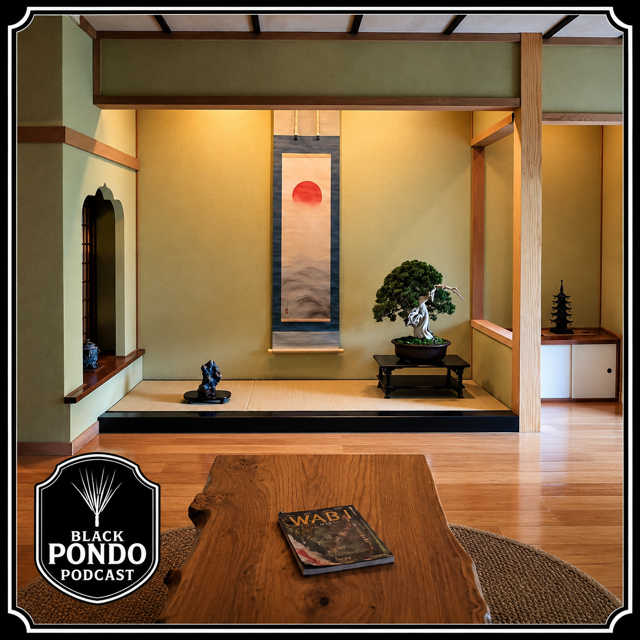
It's for that room right back there.
They don't do bonsai to decorate their backyard.
They do bonsai for that.
[01:13:01] Speaker C: Yeah.
[01:13:02] Speaker D: For the token for the tokonoma. And that is. That is.
That should be every. You don't need a tokonoma, but that should be every Westerner's goal, to take a tree, nurture a tree, grow a tree, create a tree. Until you get it to that point where you can put it in there to show it off to all the people that come to visit on special occasions.
That's the bottom line.
[01:13:28] Speaker C: Yeah.
Yeah. Tokonoma display does something magical. And it's hard for me to use words to say and express exactly what it does for bonsai, but it definitely makes it. So that is something special. And I.
[01:13:46] Speaker D: It is.
[01:13:47] Speaker C: It's beautiful. Just looking behind you, Sean, it's really something magnificent. Yeah.
[01:13:56] Speaker D: The cool thing about the Japanese Tokonoma. It's the only culture in the world that has something like that.
You can't find it anywhere else in the world.
[01:14:07] Speaker C: Yeah,
[01:14:09] Speaker D: it does not exist.
Makes you think, doesn't it?
[01:14:13] Speaker C: I want one. Someday I. And I will have one. But
[01:14:17] Speaker D: okay,
[01:14:18] Speaker C: I don't have one yet.
[01:14:20] Speaker D: Hey, you're. You're just a pup. You've got plenty of time. You got a plenty of time.
And. And if. If I'm alive, whenever you're ready, I'll fly out and I'll spend a week with you and we'll build it together. How about that?
[01:14:34] Speaker C: Oh, that would be awesome.
[01:14:37] Speaker D: All right.
[01:14:38] Speaker C: That would be awesome.
You know, so I want to ask you about your Tokonoma. However, there's one question I had, one more about Stan's, and then I would love to ask you about your space that you've created.
You know, so growing up, I was really into collecting baseball cards and comic books, actually.
And with baseball cards and comic books, they do a thing where you want to keep. You want to keep it in as good of condition as possible. You don't want to touch it. You generally, they put them behind these plastic or glass cases. You get your comic book graded, right?
And it's just as pristine as possible. If you can get a 10 out of 10, that's the best possible thing you can do.
[01:15:26] Speaker D: Sure.
[01:15:27] Speaker C: Then later in my life, I got into guitars.
And with guitars it was interesting because a vintage Stratocaster Telecaster Les Paul from the 50s, 60s, 70s, that is something that, where it's acceptable to have some wear and play. And you don't want to destroy the guitar, but at the same time, it's meant to be played and it's meant to be used.
What do you. I'm trying to find in my mind, like with a bonsai display table, does it fit into one of those categories? What's your thought? You know the
[01:16:09] Speaker D: answer.
[01:16:10] Speaker C: What is your thought?
[01:16:12] Speaker D: Two words.
Wabi sabi.
Okay.
Guitars being made out of a natural product wood. Okay. The wear and tear and, and I don't mean abuse. Just, you know, constant strumming. In one spot, you wear, you know, the finish off and eventually you're into the raw wood.
It tells a story.
I mean, it's, it's, you know, it's historic. It shows you that somebody had a passion for that instrument and played it to death, you know. You know, the ding on the side was on stage, you know, Neil Young swung around and hit the microphone stand and, you know, put a big dent in the Back of it.
All these things tell a story for that piece.
And the same, exact same thing pertains to bonsai tables. Now, you know, your high end quality bonsai tables in Japan traditionally come in a kiribako, a storage box, okay. And they are literally, you know, kept in that box to be protected.
That being said, I've been to places where you walk into a warehouse and there's four or five thousand tables, display tables just stacked on top of each other.
And they're good and very expensive tables.
But keep in mind, in bonsai display, suiseki display, the tables aren't that important.
They can be replaced.
Okay. If they're scratched because you slid a pot across, it's okay.
Because that was in a yamaki pot that was worth four or $5,000 and you just scratched the $300 table.
Who cares? Get another table. Okay?
The most important part is the tree.
It trees even more important than the pot generally, unless it's a rare antique pot or something like that. But number, number one is the tree. The tree is the most important part. The pot is secondary. The table is last in line.
Okay? If you scratch it, you nick it, you bump it, so be it.
But we also have to look at the, the historical aspect of that particular table.
And again, a lot of us aren't aware of this, but Mori Mai would go through Koko Fu 10 catalogs from the 1920s and 1930s, and he would say, oh, good table, come with me. And I'd follow him into his room. He goes, same table.
He's pointing one on the shelf and he's pointing to one in the book. It's the same table, but it's 70 years later. And he now has that table.
So the table has a provenance, it has a historic part, a history to it. So that's going to amplify the price and the value of the table.
So not every table is treated like that.
But, you know, Even at Taycan 10 or even Kokufu 10, you know, the guy walks around with a pressurized water sprayer and he's just, you know, they don't care about the table. You know, they, they don't care. They want to make sure that tree lives. You know, they can wipe that. I mean, I've gone through Coco Futen many times and I've, you know, caught a, like a shiny spot and I look down. Whoa. Underneath the table or between the table and the bottom of the pot, and I could see a, you know, quarter inch deep puddle of water just sitting there.
Because the table was old and it was centered and the water all went to underneath the pot and stayed there and the guy didn't see it.
So after seven days of being on that table, imagine the surprise when you pick up that tree and there's a gigantic white spot, you know, on the display table. If it's yours, it's no big deal. But if you, if it was a Chinese antique that you rented for the seven days or the 14 days, you know, then you gotta. Oh, man, now I gotta get it fixed or pay for it or whatever the case may be. So. But tables are irrelevant in the, in the retrospect to bonsai itself.
Bonsai is where it's at.
[01:20:56] Speaker C: Yeah, it's. It's interesting hearing this from, from a world class table maker
[01:21:07] Speaker D: class
[01:21:09] Speaker C: that the table is below the, the tree, however, and.
[01:21:12] Speaker D: Yeah.
[01:21:13] Speaker C: I don't know. Yeah, you confirmed with, with the wabi sabi thing. I think, I think there's something.
Maybe the, the pressure has been relieved a little bit. But I, I think there's something really beautiful about using a table and not, not abusing it, but using it as for what it should be and letting it age naturally. Just like we appreciate patina on our bonsai pots and our trees aging as well. There's something beautiful about
[01:21:43] Speaker D: that. You know the, the Japanese story, old tree, old pot, old stand, but they usually leave out stand. It's irrelevant. Right. But the truth is, if you have an old tree in an old pot, it should not be on a brand new table you just had somebody make for you.
[01:22:05] Speaker C: That makes sense to me. Common sense.
[01:22:08] Speaker D: Common sense. And you know, but the funny thing is, Jeremiah, that there's some people that wouldn't get that.
They would walk. Right. Oh, look at that. That's. Oh, nice tree. Good old tree and an old pot. That's really nice.
And not notice the brand new table.
And that's just lack of.
I don't want to say common sense because that's insulting to some people, but that's just lack of experience, perhaps that, that people don't, they're. They're not aware of, you know, the whole picture, so to speak.
[01:22:47] Speaker C: Sure.
[01:22:47] Speaker D: You know where. And you know, since we're talking about this subject, the old table, if everything is old in a Tokonoma, it completely changes everything.
It. It changes the mood, it changes the tone, it changes the feeling.
You know, it's.
I'll use this as an example. It may not be quite right, but it's, it's kind of accurate. I think when we were Kids, you know, we used to go to our grandma's house, right?
And we'd run in when we got there and walk into the house and you know, grandma say don't, don't run, don't do that, don't sit on there, don't get off that, get off. And when you walked in it was like you went back in the time capsule compared to the house you lived in, which was modern, you know, and built in modern structure wise.
And, and I can remember going to my, my grandmother's house, my dad's, mom's and, and she lived in this big beautiful Victorian two story home and she had this winding staircase and I had two younger sisters and we used to spend our. Because we grew up in a ranch, you know, one level ranch, so we didn't have steps except for the basement, that was it. But these were all curved and swerved and such. And we'd spend the whole weekend playing on the steps, not, not doing anything else because it was, it was cool. It was amazing.
But the same thing applies to bonsai display where if you weren't aware of it or it wasn't brought to your attention, you don't know.
So you just don't know. But you can certainly tell.
Just like you used to when you went to your grandmother's house, you walked in there, you knew it was old, okay. Because when you left and went back to your new house, it had, didn't have hardwood floors, had. Your house has wall to wall carpet.
So there was a different feeling, a different, my God, even a different smell. Jeremiah. I mean, you
[01:24:50] Speaker C: know, yeah,
[01:24:52] Speaker D: every, everybody had their own smell.
But you know, you would know. You even went to your parents house after you moved out. There's like that smell always been here, mom. Yeah.
Nothing's changed.
So
[01:25:06] Speaker C: yeah, I, I feel like it does come down to experience and, and, and I do feel like in the United States if you have not been to Japan to say to, to look at those trees, to see the kokufu taikan 10 of these other shows and you've only gone to American club shows, you're not going to really see what bonsai can be. You're not going to see the full potential.
And I do think that as you gain more experience and more exposure to really good, like what does good look like, then eventually you will start to see more and more detail and something will not feel right maybe with a certain display that you're looking at and then you can start to analyze it.
But I do think it's, it's Just lack of exposure, lack of experience. For the most part,
[01:25:56] Speaker D: it is. And if I can add to that, if you don't mind.
[01:26:00] Speaker C: Absolutely.
[01:26:01] Speaker D: The other thing that a lot of people aren't aware of, and it's. It's.
It is a little bit today, but it was more so back in the 70s, 80s and 90s with. Before we had the Google and the Internet, you know, and the only resources we had were bonsai magazines, whether it was American bonsai magazine, even European or Japanese magazines.
And they were the only pictures that really had, you know, to go off of, so to speak.
And every magazine, anything really published, they do it for one reason. That's to make money.
And in Japan in particular, we have been kind of stereotyped because every bonsai issue of Ken Dye and the other ones, it was always trees from Kimura, Suzuki, Kobayashi, all the highest echelon of bonsai professionals.
And of course, then, you know, the editors on the Americans or the Western side would get these images and they'd put them in their magazines. Bill Balvanis, for instance, he had an inside connection with Japan like nobody's business.
And because everybody wants to see the great trees. The big great trees, right.
But truth be told, Japanese bonsai is not.
Mr. Kimura, Mr. Kobayashi, Shinji Suzuki, Uchibata, Omachi. There's many, many, many, many more.
We are only seeing the tip of the iceberg.
But if you go to a.
Somewhere in central Japan, in a small village, population of 1500 people, they may have a bonsai club where six or seven old timers meet at the old abandoned gas station.
And they sit there and they work on the trees once a month.
And maybe if there's a holiday or something coming up, they put on a little exhibition.
[01:28:15] Speaker C: Yeah.
[01:28:16] Speaker D: And they're happy. They're content.
They enjoy what they're doing. It's pleasurable.
It gives them release. It makes them joyous and happy.
But the trees look like regular old bonsai trees that you would see at any American bonsai exhibition in the world.
Yeah, just very amateur. There's more amateurs doing bonsai than professionals doing bonsai in Japan.
A lot of people don't understand it. They think every Japanese guy has trees like Kobayashi and Kimura and Suzuki.
[01:28:50] Speaker C: Yeah.
[01:28:51] Speaker D: And that's the furthest thing from the truth. Furthest thing from the truth.
[01:28:55] Speaker C: Yeah, totally. Yeah. The. The quality varies quite significantly in Japan. Absolutely.
[01:29:01] Speaker D: Yes,
[01:29:02] Speaker C: yes,
[01:29:02] Speaker D: yes, yes.
[01:29:04] Speaker C: Hey, Sean, I'm gonna go turn the light on so it doesn't look like I'm in witness protection.
[01:29:09] Speaker D: I thought you Left.
I didn't even know you were talking to
[01:29:13] Speaker C: me.
Give me just one sec, I'll be right back.
[01:29:16] Speaker D: No worries. Yep, that's fine.
[01:29:17] Speaker C: Okay, that's better.
Oh boy.
So
[01:29:23] Speaker D: what's next on the agenda now that I can see you?
[01:29:27] Speaker C: Well, you know, I guess regarding your study in Japan and I know that you have been to. It appears to me that you've been to Japan many times and you have studied under many different people for many different aspects of bonsai or, and display and woodworking.
[01:29:53] Speaker D: I have.
[01:29:53] Speaker C: You know, I saw that there were seven individuals that are pictured on your website and I was wondering if maybe you could tell. Talk with me a little bit maybe about just kind of like what are some of the most impactful experiences of studying bonsai who have been the, the, the biggest.
Made the biggest impact on your. Your life?
[01:30:17] Speaker D: Yeah, well like most, most people are aware or most people know that, you know, at the time when Mr. Mori Maya asked me to come study, I was 2,000. So I had a one year old daughter, I had a mortgage at a part time job. My wife had a full time job.
There was no way I could do a standard three or five year apprenticeship.
And Mori Mai was aware of this and so he sat me down and he said this isn't short term and I want you to come and stay as long as you like or as long as you can.
If you come this year for two weeks, wonderful.
Maybe next year you can come for a month.
Maybe you can only come for a week.
You come whatever you, you come every year, whatever works for you.
Okay.
Which was, you know, not a lot of people would, that would put the time and effort into it.
So I, I was very, very grateful. My longest stay in Japan was, was 90 days.
Sometimes it was two weeks, sometimes it was a month and a half, two months.
Shortest time might have been four or five days. But that was for a Suiseki exhibition at the Meiji Shrine. But I've seen 18 Koko Futen exhibitions.
[01:31:59] Speaker C: Wow.
[01:32:01] Speaker D: And you know my first trip to Japan was 2000 and I went every single year up until 2018.
And that's when I was in the midst of my divorce from my first wife. So I didn't go that year. And then every year after. Well, I didn't go a couple years for Covid for obvious reasons. But so yeah, I've been there a good 21, 22, 23, something like that time. So.
And, but my biggest influence was obviously Mr. Mori Mai Maury. Mai came to my house many times when I Used to put together the International Stone Symposium here in Harrisburg, Pennsylvania.
And he was our guest.
We did it. We did seven shows and he was a guest speaker of five of them.
So the stories I could tell you about that.
Where I live now, right behind me, is my childhood house where I grew up.
And Maury Mai used to stay in my old bedroom in the basement. I mean, it wasn't a dirt floor or anything, it was like an apartment.
But one night he stayed up late to make scroll cards for the scrolls for the auction at the stone show.
And he started meditating and he started to recite the sutra and he starts to sing.
And it was like one o' clock in the morning. And my phone rings. It's my mom.
[01:33:45] Speaker C: She goes, keep
[01:33:47] Speaker D: in mind my mom had the Irish accent to the day she died. She goes, john, Jesus, Mary and Joseph. Morning my size. He's down in the basement and he's singing songs.
I don't know what's wrong with him. Do you think I should go check on him?
I said, no, mom, it's okay. Just let him go. He'll be fine.
But
[01:34:10] Speaker C: yeah,
[01:34:12] Speaker D: Maury Mai was, was, was the number one guy, number one influence and, but Maury, I'm sorry,
[01:34:20] Speaker C: I was just going to say really quick, if for anyone listening, Mori Mai has some incredible YouTube videos out.
I'm not sure if you follow him on YouTube a whole lot, Sean, but check out him awesome on YouTube and his, his site S Cube, which has some just phenomenal bonsai products. All kinds of trees, stones, stands, pots. He sells everything.
[01:34:52] Speaker D: Biggest, biggest bonsai guy in Japan. He's the king.
He's like the Mr. Iwasaki of the 70s, 80s and 90s.
But I don't think you may not know Jeremiah about, you know, his weekly videos that he does about whatever display wherever he goes or whatnot. That's all off the hip
[01:35:14] Speaker C: really.
[01:35:14] Speaker D: There is no cue cards.
There is nothing.
And his daughter is. His daughter is doing all the videotaping.
[01:35:21] Speaker C: No way. Okay.
[01:35:22] Speaker D: Yes. He
[01:35:23] Speaker C: does such a good job with those. Yeah.
[01:35:25] Speaker D: And, but you know, he is a perfectionist from the start, from the get go.
And. But if you ask him, he'll tell you he's a bonsai farmer. You know, he's just a bonsai farmer. You know, he's an orphan and wasn't an orphan but got in some trouble as a youngster and his mom sent him to study with Mr. Sudo and he stayed with Mr. Sudo for about 26 years as an apprentice, you know, until he, you know, Put enough money aside that he could open a store in Ninza. That was Mori Mai's first business, Naginza, which is still open today.
And then it just kind of elevated, elevated and he, he got a lot of, you know, investors and people supporting him and it just grew and grew and grew and grew to where it is today.
But now it's at the point where he's afraid.
He's 63 years older than me, so he's 67.
And he's not afraid about.
He, he's concerned about his employees, his faithful employees that have been with him for 20, 30 years.
If he sells the business, all those employees are going to lose, probably lose their job because nobody in Japan has the kind of money that could buy the entire business.
So Mori Mai would probably have to sell it in, in sections.
And the people who buy it, they're going to want their own people, not, you know, the old timers, so to speak.
So, so he's very concerned. He's not concerned about himself, his health, you know, he's concerned about the employees, you know, that have been that devoted their lives to him.
You know one story when you see some of the website, well, the photographer, Sakasan is his name, Morimai stole him from Kim Bomb Bonsai magazine.
And he was. And Mori Mai was just starting out and he had, you know, he was, you know, struggling like any new business and he took Sakasan and Sakasan's been with him before. Well, I've known Morimai for.
27 years and Saka was with him before I met Mori Mai. So when you have an employee that long, you know, it's more than an employee boss relationship, you know, it becomes family.
You know, even here in the west the same thing basically happens.
But Morimi is at the point in his life where he's accomplished what he wanted to accomplish.
You know, he's very much into Hoshu in the sub temple up in Daisakoji Temple in Kyoto where he's where he opened the first bonsai garden in a Buddhist temple which is by the way is expanded to another 200 trees.
It's open to the general public. Yeah.
And he purchased a house, Mori Mai did, a small, very modest two story home outside of the gates of the Daitakochi temple.
And he wants to live in that house and he wants to walk up into the temple and work on the trees when he retires. That's all he wants to do.
Him and the priest, the head priest at the temple.
We're best of Friends for many, many decades.
So it's interesting.
[01:39:16] Speaker C: Sounds like a good life.
Yeah,
[01:39:19] Speaker D: yeah, yeah. It would be a good life. Yeah, yeah, for sure, for sure.
[01:39:24] Speaker C: Yeah.
Now, pseudo, you said Mr. Morimai studied with pseudo sun for 20 something years?
[01:39:33] Speaker D: Yes, 26 years.
[01:39:35] Speaker C: Is pseudo sun like the, the godfather of, of display or. I, I've heard the name mentioned. I don't know much of the history there.
[01:39:47] Speaker D: It was actually Takayama was the gentleman that created what they call the Cato Group, the study group which consisted of 30 members.
Takayama San Hand selected the 30 people to be in this group.
And he was 86 years old at the beginning of this group.
[01:40:10] Speaker C: Wow.
[01:40:10] Speaker D: And he was the Sensei.
And so you had.
Kobayashi was in it, obviously Mr. Sudo was in it.
Many, many, many famous people, many, many unfamous people. But people that were very high in society, that had.
Endless pockets of money, very, very important people. CEOs of Toshiba Honda motor cars, doctors, lawyers, very highly sophisticated people.
And they had one little guy, one little kid there.
He was a teenager, young teenager, 14 years old because he was an apprentice for Mr.
Pseudo.
And that guy was Mr. Morimai.
But he wasn't part of the study group.
He was the gopher. He was the kid that sat in the corner for hours and hours listening to theory, stories, history, reasoning and unbelievable education for just being there. You know, sometimes you can just go somewhere and not try to learn anything and end up learning a whole lot because you're just there all the time and you see all the time and you hear all the time.
So any case, the group consisted of 30 individuals and it was very formal.
You didn't show up for a meeting in dungarees and sneakers and a baseball cap.
You walked in either in a formal kimono or you walked in wearing a three piece suit.
[01:42:05] Speaker C: Wow.
[01:42:06] Speaker D: And you sat in a formal Japanese room and you sit there and you had your study group and you would discuss many different things, display and so forth, and everybody would bring their piece of knowledge or information.
And it grew and grew and grew.
And then the only way you could join is if somebody died.
But even if you wanted to join, you still had to be selected because you can only imagine that there's these 30, I don't want to say snobby, snobby, uppity, uppy people, but there was a whole lot of other people out there were just dying to get in to get information.
So there was a super long waiting list and only suitable people to them were probably selected to come in one wonderful thing and one of the most entertaining experiences that I had in my travels in Japan was Morimi knew all the study group, he knew all the members.
[01:43:17] Speaker C: Yeah.
[01:43:18] Speaker D: So if he would put on an exhibition, a Suiseki display at Hoshu, in, at the temple, which I've helped many times over the years, and he would introduce me to all these people and I would sit there, be drinking tea with all these Cato members.
One gentleman, his name was Mr.
Negishison.
He was, he was an incredible guy and he was some kind of distributor for Nike clothing. He's the number one, number one retailer of Nike clothing in Japan.
Wow. Back in, back in the day.
But he was, he was one of the people who studied in the study in the Cato study group.
And I, I knew him for a good at least 20 years.
He lived close to Mori Mai and Mori Mai would get tired of me asking questions, so he would have one of those employees drive me over to Mr. Negishi's house
[01:44:37] Speaker C: and
[01:44:37] Speaker D: drop me off and, and I, I'd spend a day there, you know, bending Mr. Negishi's ear.
His English wasn't very good, but neither was my Japanese, so we kind of communicated pretty well. But his wife could speak
[01:44:52] Speaker C: English,
[01:44:52] Speaker D: but I, ironically, Jeremiah, they were both, they were both tea masters, him and his wife.
And his house was a traditional Edo style upper class home.
He had probably seven tokonomas in the house itself.
From the entranceway to a traditional room, like behind me, every nook and cranny had a little type of tokinoma of some sort. But any case, long story short, he was a wonderful man and I learned a tremendous amount from him and unfortunately passed away two years, three years ago.
And the last time I was there in Japan, Worry Mai said, come on, we're going to pay our respects to Mrs. Negishi.
So we, we drove over and we, you know, walked in and I gave my condolences to Mrs. Negishi and she offered me to light incense to a little altar they had set up for the memory of Mr. Negishi.
And then we had coffee at the table and some fruit and she excused herself. And I'm sitting there with me, Mr. Morimai and Mr. Mori, Mai's wife, and she comes out the hallway and she hands me this stone and it's nothing fantastic, but that's not the point of Suiseki.
It's the history of this stone.
And she took it out of his office and this was a stone.
When he would go into his office and work at night and he would, the type of stone you just be contemplating. And he'd hold the stone and just, you know, work it between his fingers. Just, you know, like those rubber balls people squeeze for stress relievers.
[01:46:51] Speaker C: I
[01:46:51] Speaker D: think this was, I think this was Mr. Negishi's stress reliever. But anyway, you know, she, she gave it to me and I cried.
I cried. You know, maybe people might think it's kind of silly but you know, he taught me things. That decision.
If I don't tell people, it's going to disappear, you know, if, if I don't share what I've learned over the past, you know, 26 years of doing this.
I, I, I, I don't want that to happen. You know, I, I, I want to share everything that I've learned with everyone so they know.
So 50 years from now they can tell the stories so those people know so they can carry on that story. So the tradition can carry on for, you know, millenniums, you know, God willing.
But that, that Mr. Negishi was number two as far as the learning ability.
And then there was, you know, Kujisu, the diesel carver from Hamamatsu. I spent some time, quite some time with him.
And he, he was a pistol.
He liked to drink, he liked to smoke.
I remember when I stayed at his place for a week every time he worked on a daisa, he worked on his floor.
A little room off side of his kitchen no bigger than your, a little six foot by four foot bathroom that was the size of his workshop.
And anyway, cigarette hanging out of his mouth. And he'd be sitting there and he would be, you know, carving away.
But he was a, he was a good guy and I've known, I knew him for many years and you know, I met him as I was introduced the first time by Morimai Kuji Suzuki, number one daisa carver, you know. And then he would say in Japanese mori mai would to Mr. Suzuki and say American dies a carver. And, and Mr. Suzuki couldn't believe it. He said what? Nah, suiseki in America. You know, he just had no concept of it. But anyway, so he, and he loved horses. He was actually, first time he ever saw suiseki. He was, he had a, a dog or a cat that was ill and he took it to the veterinarian's office in the town and in a waiting area there was a suiseki on display.
And that's where Suzuki saw his, or Mr. Suzuki saw his first suiseki. And he was intrigued by the wooden base because he Was a schoolteacher by trade.
And like I talked about the tables, there's no factories, you know, it's just a craftsman just practicing his craft.
Suzuki did the same thing.
And Suzuki became the number one daiso carver in Japan.
He was the only, he was the only daisa carver that could pay his taxes by carving daises.
And so he left school teaching and he made daises on a full time basis. And yeah, he was, he was a. He's an amazing person. An amazing person for sure.
[01:50:17] Speaker C: How much time did you get with the Dyza carver?
[01:50:22] Speaker D: Only seven days.
[01:50:24] Speaker C: Seven days. Okay.
[01:50:25] Speaker D: Yeah,
[01:50:25] Speaker C: yeah,
[01:50:26] Speaker D: because I can tell. I, I was carving dyes in the States before I went to Japan.
[01:50:32] Speaker C: Yeah. Huh.
[01:50:33] Speaker D: So
[01:50:33] Speaker C: did it change what you were doing? Significantly, drastically?
[01:50:39] Speaker D: No, no, because I was, I was actually amazed, Jeremiah, because our techniques were so identical.
[01:50:49] Speaker C: Ah, really? Okay.
[01:50:50] Speaker D: In retrospect, you know, I mean, you know, a kitchen cabinet maker in the United States and a kitchen cabinet maker in, in Belgium, basically the same thing. You know, maybe some things would change styles or whatnot, but it's, it's carpentry and diesel. Carving is. Dies of carving.
The one thing that I'll never forget is that, you know, the, the foot of the, the Dyza is kind of inlaid, has a curve to it. And I would always take piece of 220sandpaper and I tear it to a size and I'd roll it like a joint to. It was round, like around a round sanding tube. And that would give me the, that would give me the, the, the concave contour on the foot.
Well, when I'm with Suzuki, I'm watching him.
Instead of rolling a blunt, he would take a piece of a metal wire, copper wire, electrical wire that still had the COVID on it, and he would roll the sandpaper around that into a tube and then he would use that. The same thing.
[01:52:05] Speaker C: Yeah,
[01:52:06] Speaker D: it was very, very cool. Very limited tools. He didn't have a, you know, tabletop scroll saw like I have. He had a handheld jigsaw. It was a Makita.
[01:52:18] Speaker C: And
[01:52:18] Speaker D: he would hand carve or hand saw the, the dices out.
Didn't have a planer, he had a handheld Jigsaw. He had a 3, 8 Makita drill and he had a Dremel tool, but it was a Japanese brand. Wasn't Dremel. American Dremel, but same concept.
[01:52:44] Speaker C: Yeah,
[01:52:44] Speaker D: they were the only. And chisels, a lot of chisels. And metal files, which I thought was interesting.
And that's all he had.
[01:52:54] Speaker C: Okay.
[01:52:55] Speaker D: And go Ahead.
Well, one more thing about Suzuki, one thing that made Suzuki's vises more unique than anyone else's is that his visors never had a finish on them.
And when, I mean a finish, they weren't lacquered.
Okay. They didn't have polyurethane, they didn't have oil on them,
[01:53:17] Speaker C: nothing.
[01:53:19] Speaker D: But he would get to the point now, again, using good, hard, old, old rosewood, he would take it down to 3,000 grit.
[01:53:29] Speaker C: Wow.
[01:53:29] Speaker D: Okay. 3,000 grit.
And with hardwoods, particularly rosewood, if you get it down to 3,000 grit,
[01:53:39] Speaker C: looks like lavender
[01:53:41] Speaker D: and you hit it with a buffer, it shines up like it's been coated with the. With a glossy lacquer.
Yeah. Amazing. That's what made his D is so unique to everyone else's, which would, you know, lack room and make them shiny and whatnot. So.
[01:54:00] Speaker C: Yeah.
[01:54:00] Speaker D: Anyway.
[01:54:00] Speaker C: Okay.
[01:54:01] Speaker D: That's a little tidbit of information people don't know about.
[01:54:04] Speaker C: That's cool.
[01:54:05] Speaker D: Yeah.
[01:54:06] Speaker C: I was wondering in your, from your perspective, what separates a lower quality dyza from a higher quality daisa or some like a truly world class diesa?
[01:54:23] Speaker D: It's craftsmanship.
You know, it's. It's very, very simple.
I'm glad you asked that question. I just happen to have some here.
Okay, so these are old daises that customers bought in Japan, a suiseki at the Green Club or something.
And then they send, they bring it to me and say, can you make a new daiser for it?
It's amazing how you go through this box and the varieties of wood.
There's even a daisa in here made of paulownia or kiri wood that they use to make the boxes.
[01:55:03] Speaker C: Yeah.
[01:55:03] Speaker D: And it's, it's terribly soft. You. You can't do anything with it. But somebody did.
Very. This is very westernized.
All probably done with a router. No, no, real hand tools actually used maybe to cut the inside. But other than that, it's all, it's too machine made. It, it's, it's too perfect.
Suiseki dies are not perfect.
These stones are not perfect.
So that's something taking consideration.
But all different colors of wood. You can see a dark. This is another one. This is Polonia wood. I mean, I, I could literally.
Okay, that's pretty soft. You don't want this.
But you know, again, it all goes to that craftsman guy that's making the dices.
And it's like any craft in the world, you know, you've got some people that are going to excel, excel at it. Some that are going to do very, very well at it. And some are like, it's good enough, it's good enough.
I'm not a good enough guy, so I
[01:56:17] Speaker C: can tell that about you.
[01:56:19] Speaker D: This, okay, this is stone from Puerto Rico I collected on the beach.
But this finish on the dyza, okay.
Beautiful, isn't it?
[01:56:36] Speaker C: Yes.
[01:56:37] Speaker D: You know what's special about it?
[01:56:41] Speaker C: We
[01:56:42] Speaker D: just talked about it.
[01:56:44] Speaker C: No finish,
[01:56:46] Speaker D: no finish,
[01:56:46] Speaker C: just sanded.
[01:56:47] Speaker D: This is a buffed, just like Kuji Suzuki.
[01:56:52] Speaker C: Yeah.
[01:56:53] Speaker D: Hand buffed.
Three, three thousand grit sandpaper.
The rosewood is not Indian rosewood. It's actually South American.
They call it South American cherry, but most stores call it rosewood. But, but very hard, very dense. But the sheen, as you can see, and I promise you, there's no artificial coating on it whatsoever.
[01:57:18] Speaker C: It looks perfect. It's so beautiful. But
[01:57:23] Speaker D: yeah, and again, you know, there's good dies of makers and there's not so good dies of carvers. And there's some really bad dies of carvers, but it's that, that's life. I mean, it's like, you know, you have good baseball players, you have not so good baseball players.
You know, you got the, the minor leagues, farm clubs, and then up, up, up, up until you get to the professionals. And I think the same thing can respond. It works basically with daiser carving, table making, bonsai even.
You know, it's. I think it's is, it's how far you want to exert yourself to learn and how much you want to practice and you know, understand the techniques and not necessarily following the techniques, but understanding the techniques, how it's done.
These things help you better yourself and it keeps your eye more focused and you start to see things that some people don't even see.
And that is just from being a good studying person. I guess it's a kind of a weird phrase there. But you know, some people have passion for things and some people just like doing things, you know, But I can assure you, and it doesn't matter what medium or even what, what it is, there are people out there that just have more compassion than the other person and they have the ability to create things little better than that other person only because their passion is greater than the other person. So.
Yeah.
[01:59:08] Speaker C: Well, thank you so much for sharing all that. And your dyza are truly world class, so high quality, such a, such a high level. And like to my eyes, I mean, they look perfect even though I know not machine made. They look like they have a personal touch to them. So incredible.
[01:59:33] Speaker D: Well, you know, it's it's like I said, it's. It's a real, real quick 30 second story. When I started doing dices, I did tables first. I knew nothing of Suiseki, didn't nothing of dices.
And Jim Doyle did the same thing to me again.
Came back from China with a hand, with a box full of stones from the Gavi Desert, Gobi Desert. He said, do you know what Suiseki is? I said, I have no idea. He said, here's Yuji Yashimura's book. Here's a bag of stones.
I've got the same show. I've got the same show in Chicago in two weeks. Do you think you can read that book and make dices for them? I said, I'll try.
I did. They weren't the greatest, but he sold every one of them and I got paid.
I used to go out into my driveway before I had a blacktop that was just what we call limestone here in Pennsylvania. Just big rocks.
And I'd go out there and I'd pick up a rock. I wouldn't even look at it. I'd just pick it up and I'd find a side and I would practice seating that stone into a piece of wood until I got a perfect fit.
Then I'd throw it away and I'd grab another stone and practice and practice and practice till I got it seated well.
And I did that for months and months and months. Jeremiah.
And like life, the more you do it, the better you get. You can't help do it.
[02:00:56] Speaker C: Oh, absolutely.
[02:00:57] Speaker D: If, if you have that passion, you know, you've got to have passion for it, you know, just like bonsai, you can't.
You know, I don't feel like watering today or I don't feel like pruning that today.
You got an attitude like that. You need to find coin collecting or something like that. Something different. Yeah, sure.
[02:01:16] Speaker C: Yes.
Sean, so you. I. I know you've been teaching a lot of individ.
Do you, you also have an apprentice currently?
[02:01:24] Speaker D: Yes, yes.
[02:01:25] Speaker C: That. That's so awesome. I love to hear that. I want you to pass on these skills.
[02:01:30] Speaker D: Y.
[02:01:31] Speaker C: Y.
[02:01:31] Speaker D: And that was, that was my. Go ahead.
[02:01:34] Speaker C: Yeah. What does that look like? How, how. How is the apprentice working out?
[02:01:40] Speaker D: He's been with me for almost three years now.
And you know, he's.
He only comes here on the weekends because he's got a full time job.
He's 31 years old, single guy, came from a broken home.
But nevertheless, he was brought up very, very well. Very respectful.
Respectful kid.
Anyway, I Knew from the first time I met him. He came wandering in at my open house one day and we just started talking and I liked his personality. He was kind of cocky, if you will, and I kind of like that about him. So anyway, I, you know, I said, you want to learn bonsai? He goes, I'd love to learn bonsai. I said, you can come every weekend if you want. I said, I'm not going to pay you.
I said, I'll give you a little something when I can. I said, but, you know, I'll teach you what you need to know. He said, okay, man, I'm in.
So, you know, he can carry it on. I'm appreciative of that. So.
[02:02:46] Speaker C: Well, I'd love to see you teaching the next generation and through your apprentice as well as I, you know, all these workshops that you do. And I'm sure that you've inspired a lot of people with the different workshops that you've done, especially like the root carving one. And have you've done da carving workshops as well?
[02:03:08] Speaker D: Yeah, absolutely. I do them just like the root stand workshops for clubs and such. But this past August here at Three Mountain Bonsai School, I did a, a three day suiseki daisa seminar. Ran Friday, Saturday and Sunday.
And Friday was basically theory and PowerPoint presentations. And then Saturday in the morning you made a daiso for a cut stone.
And then in the afternoon you made another daiser for uncut stone.
And then Sunday you made a kiribaku box for one of the stones that you made the dies of war on Saturday.
[02:03:46] Speaker C: Oh, that's
[02:03:47] Speaker D: cool. So, yeah, it was fantastic. And you know, you're doing something. I had six people and you know, by Saturday afternoon, you know, they're all in the workshop here working together, all grinding. Sound like the big dentist's office, you know.
And you know, one of them said, hey man, this is really fun. You know, we should do this again next year. Yeah, let's do it next year. Oh, yeah. Hey, let's do it next year. So I had a guy fly in from California, guy from North Carolina, Maryland, Ohio, and two local guys from Pennsylvania here, and then rage as well. So it was, it was pretty cool. So we're going to do it again next year.
[02:04:27] Speaker C: Oh, that's awesome.
[02:04:29] Speaker D: Maybe you can get a kitchen pass for a couple, couple days and come out and visit.
[02:04:33] Speaker C: That sounds like fun. Yeah, that sounds like fun. Seriously, awesome. Well, you know, I want to be respectful of your time. I'm also, I'm super curious about the space that you've created.
And I read Mr. Volvanis blog talking about you hiring some Amish carpenters to build the frame. And then did you build the rest of it? Is that kind of how it went?
[02:05:04] Speaker D: Yeah.
So I broke.
I had in the beginning of COVID Covid hadn't started yet. It was early March.
And I found an Amish family, a father and two sons that were. Needed some work. And they were recommended to me by a buddy of mine who was in the building business.
So the guy came down, they don't drive, you know, so they brought. Had a driver drive him in a car and dropped him off and came up, introduced himself. And, you know, I had blueprints I had made up already and so forth. And I said, well, this is what I want. I want this, that and the other thing. And, you know, I want, you know, cinder block, concrete floor. I want, you know, two by six walls. And I want, you know, four, six pitch on the roof, metal roofing.
And then the outside of the building parged, you know, covered in stucco. I said, okay, I'll give. I can. I'll give you a.
I'll quote your price, you know, in next week or two. I said, okay. So he got back to me and he gave me a price which was unbelievably inexpensive.
I said, when can you start? He goes, I can start probably middle of April. I said, okay, great.
You know, before COVID you could buy two by four for 99 cents at Lowe's or Home
[02:06:23] Speaker C: Depot. Yeah,
[02:06:24] Speaker D: well, Covid hit. They went up to $5 apiece, but so did everything.
But, you know, this guy, you know, I gotta say, God love him, he stuck to what he quoted me, even though he quoted me prices in March before COVID came.
[02:06:46] Speaker C: But
[02:06:46] Speaker D: he hadn't bought anything.
So anyway, you know, dug the footers, poured the. Found the Poured the footers, put up the block, filled it in. Block, whole nine yards. Had it done about three and a half weeks.
And then inside, it was just a skeleton. It was just open, two by fours. So myself, Tricia, you know, we ran all the plumbing, all the wiring. I did all the electrical, all the plumbing, insulation. And then I had one bonsai buddy of mine who's a bricklayer. He helped me put up the drywall.
In the building alone, there was 63, 63 sheets of drywall. 12 by 8 or 12 by 4. 12ft by 4ft.
So the structure itself is 28 by 44.
Half is the work studio and the other half is the Japanese room.
And, you know, it was. It Was tough. Oh, did I mention I was diagnosed with prostate cancer as well during COVID So it was. It was, you know, either the smartest thing I've ever done or the stupidest thing I ever done at that point in time. But, you know, thank God prostate cancer was taken care of, and I'm cancer free at this time, so I'm happy about that.
[02:07:59] Speaker C: That's so
[02:08:00] Speaker D: great.
But, you know, it was.
I mean, they didn't put it up in, you know, in, you know, five or six weeks. And then I opened the doors. You know, it wasn't like that. I worked on it for two years after that, just, you know, putting in cabinetry work and building the tokonomas and, you know, like I mentioned earlier, when you're, you know, when you're an artist, you've got, you know, sometimes you're hot, sometimes you're not.
And there would be times where I'd like to.
I want to put up cedar, you know, number one cedar.
But the two by fours are $75 a piece. Now I'll just wait a couple weeks until I get a couple orders out and then I can go buy it.
So it's, you know, baby steps and. But, you know, and you're not a rich man. You got to do what you got to do. And it all worked out.
But the one thing I have that's kind of depressing is that obviously a day's going to come when, you know, the good Lord takes me and someone's going to buy this house.
What's gonna. What are they gonna do there?
You know, it's. It's like come in and rip it out, throw in a dumpster and burn it in the backyard or something. I just don't know. I. I wish.
I wish some organization would contact me and say, hey, listen, we'll come and extract it and reassemble it at some garden, garden center or something.
But I.
Weird things go in my head like that. You know, it's just like my inventory and all the antiques I have and, you know, are they going to be out in my driveway, you know, at a yard sale, you know, selling, you know, bonsai tables for, you know, a $150, I don't know, pottery, you know, but I think I need to just sit down and just really do an accurate inventory with names, dates, you know, you know, what its estimated value is, what I paid for it. And so.
[02:10:10] Speaker C: Yeah,
[02:10:11] Speaker D: anyway.
Yeah, it's not so bad.
[02:10:15] Speaker C: Well, I am just absolutely blown away. I'm. I'm wondering what it Feels like to have built all that, spent all that time, and now be able to enjoy it.
[02:10:30] Speaker D: It's a pretty cool feeling.
So that's my second tokonoma. This is semi formal.
And you see the main post in the center, that's tokubashira. That's basically the identifier that tells you whether it's informal, semi formal, or formal.
The main one that you saw most of the night, the toko bashira there, it's perfectly square.
[02:11:00] Speaker C: Okay,
[02:11:01] Speaker D: okay. And straight.
[02:11:02] Speaker C: So more formal.
[02:11:04] Speaker D: Yeah.
I guess I didn't forget. This is some of my stuff are.
These are a lot of bronze and tempeh items for display.
Most of this stuff is for sale, but this is one of my prized joys.
I don't know if I can.
This is my tea room
[02:11:34] Speaker C: now.
[02:11:35] Speaker D: Can't really see. I don't have a. I don't have a light in here for a reason. But the very dark edge there. You can see the toka bashira.
And you can see there's not. It's not straight. There's movement in it.
And it's also covered with bark. It's also covered with bark.
And this toko bashira I collected only a couple hundred feet from my house. It's actually Pennsylvania mountain cherry.
And, yeah, it's pretty cool.
[02:12:07] Speaker C: That's awesome.
[02:12:09] Speaker D: And then there's also an outside entrance that goes out into my garden.
These are Japanese tables.
These are all things I sell take to shows.
[02:12:20] Speaker C: I saw pictures on Bill Volvandis's blog, which was really nice to be able to see everything, I feel. But we got to get a professional videographer out there to film your space. It's just so incredible and.
[02:12:37] Speaker D: Well, thank you.
[02:12:39] Speaker C: I would love to see more pictures. Yeah,
[02:12:43] Speaker D: pictures
[02:12:43] Speaker C: and videos someone needs to do.
[02:12:46] Speaker D: Yeah, actually there's some guy that's putting together some kind of a movie he's been working on for about four years. Been all over the country interviewing people. And I mean, he's a legitimate filmmaker and, you know, he interviewed, you know, everyone.
Bjorn.
I don't know if he got to Ryan new or not, but, you know, Sue Thin and you know, anyway. And he actually stopped here spending with me. Okay. So I don't know, let you know if anything. I hear what's going on about that, but.
But if anyone locally is watching this and you know how to fly a drone, you know, we'll work out, you know, lessons, product or something maybe to do a video of my place that I can post online for people to see. I actually have a YouTube channel. But like I said, I, I'm an idiot when it comes to these laptops and such. I can't even cut and paste on my phone. That's how much of a sped I am sometimes. But so anyway,
[02:13:53] Speaker C: well, I'm, I'm excited to see. I know someone is going to grab a hold of you and make a really cool film with of your space and it needs to be done so.
[02:14:03] Speaker D: Well, that, that would be great. That would be great. And if anyone watching, you know, you want to learn Bonsai live close by, give me a call.
Clubs, you need somebody to do some demonstrations or workshops.
I'm certainly available. And I, I, I just want to share. I just want to share.
That's all I want to do.
[02:14:26] Speaker C: I love it. I love it.
Awesome.
[02:14:29] Speaker D: Well. Well, thank you. Jeremiah. Jeremiah, I really appreciate this time with you and kind of got to know you a little better, but we really need to sit down and throw a couple beers back and, you know, maybe, maybe we can get you out here. Pennsylvania.
[02:14:45] Speaker C: Yeah.
[02:14:45] Speaker D: You know, for, for something I'm doing, I think you would, you would enjoy it. And you're, you're young enough to, you know, appreciate it and get it stowed in your mind so you don't forget about it, you know, so.
[02:15:00] Speaker C: Most definitely. Most definitely.
[02:15:01] Speaker D: I want, I want to thank you and your podcast. Thank you so much for asking me to be a part of it. I appreciate it.
And hugs to your family and that new puppy that's coming. Brother,
[02:15:14] Speaker C: thank you so much. Hey, Sean, this was incredible. I really enjoyed our conversation.
[02:15:19] Speaker D: I did.
[02:15:20] Speaker C: And I look forward to, you know, getting to know you better in the future. Absolutely. This was just awesome. Yeah,
[02:15:26] Speaker D: it was awesome. And, you know, listen, I got off kinds of subjects. You want to do it again sometime, just let me know,
[02:15:32] Speaker C: bro. I'm game. I'm game. Okay,
[02:15:35] Speaker D: that
[02:15:35] Speaker C: sounds great.
[02:15:36] Speaker D: All right.